Historic Anderson Hall re-opens its doors after major renovation: a look inside the reopening
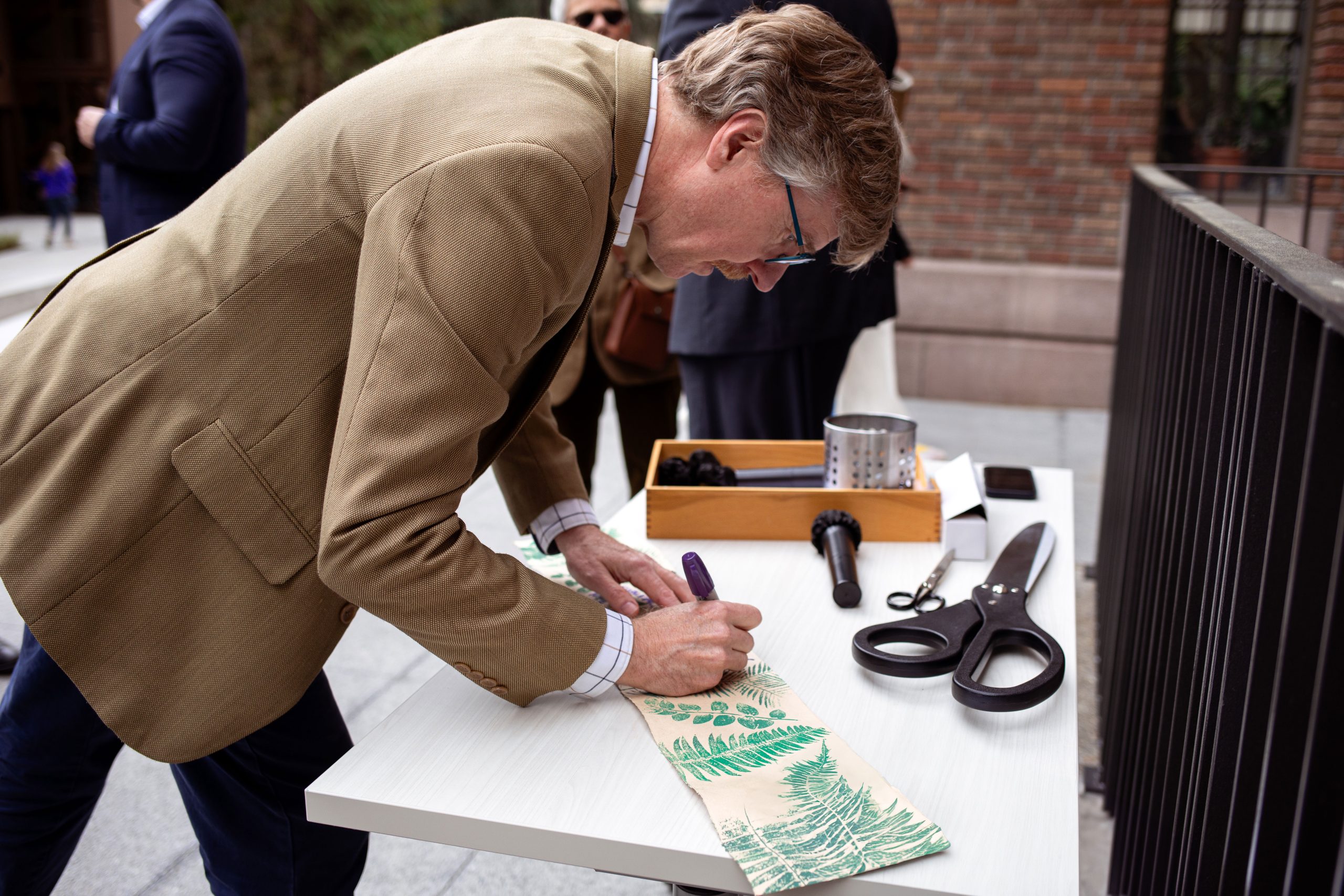
Anderson Hall, the longtime home of the UW School of Environmental and Forest Sciences, has reopened to students, faculty and staff after nearly two years of renovations. The historic building features a more welcoming atmosphere, improved accessibility, upgraded technology and critical safety enhancements — bringing it in line with the needs of a 21st-century education. University, college and school leadership gathered April 10 to mark the official opening of the renovated building with a ribbon-cutting ceremony.
“Today marks an exciting new chapter in the UW’s globally renowned forestry program,” said University of Washington President Robert J. Jones, speaking at the event. “Forestry connects our extraordinary students, faculty and researchers across multiple disciplines to help us understand and sustain the natural world — and there has never been a point in our history where that commitment has been more critically important than it is today.”
The goal of the renovation was straightforward: preserve Anderson Hall’s legacy of leadership and innovation while meeting the needs of today’s environmental and forest sciences community, all while maintaining the building’s historic character and staying within budget. Ultimately, the team succeeded on all fronts, and has even applied for a LEED Gold certified sustainability rating.
“For more than 100 years, Anderson Hall has been the centerpiece of gathering for the SEFS community,” said Dan Brown, the school’s director. “Classes meet here, and the Forest Club Room serves as an important community space. It has always been a place where people come together.”
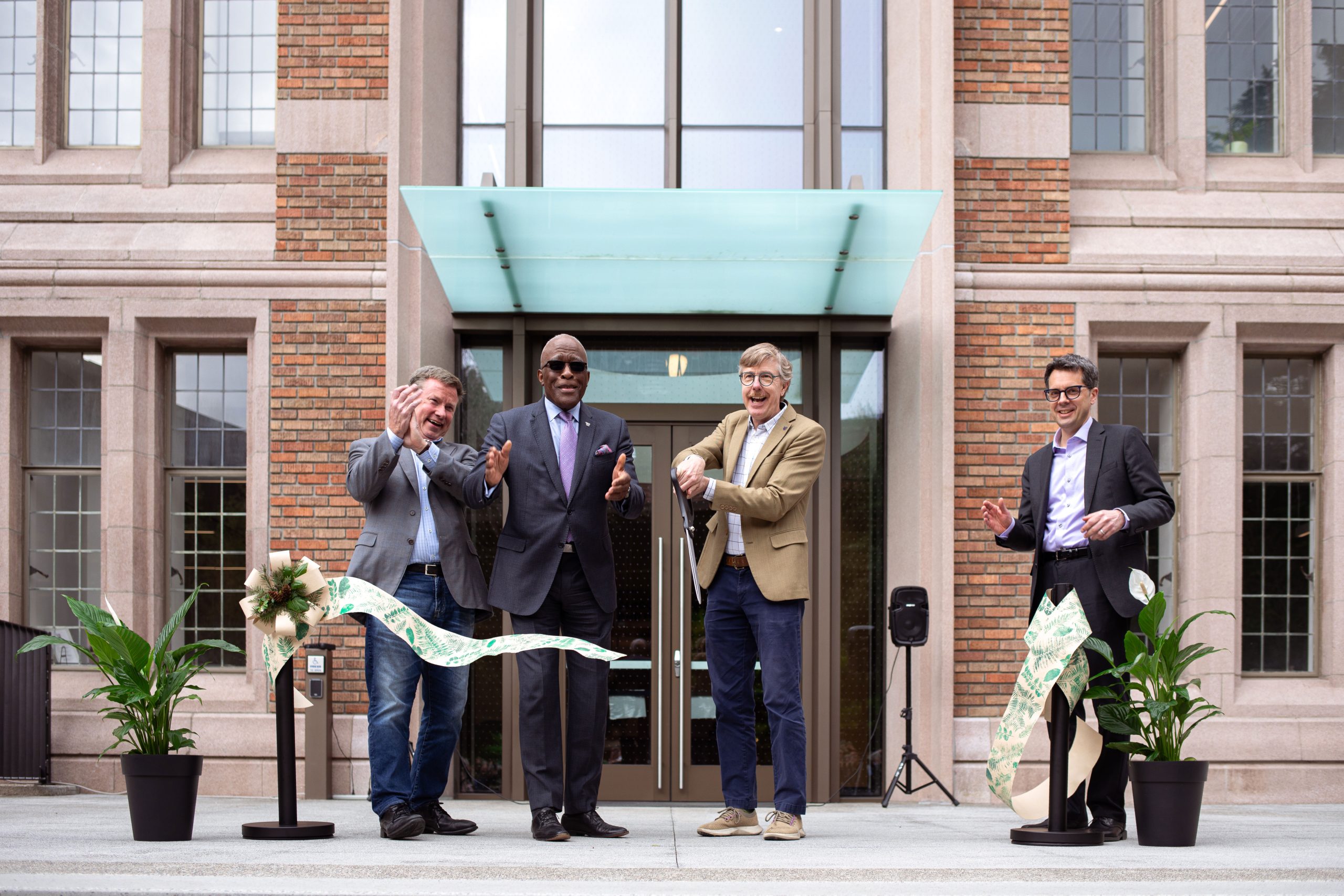
Upgrades to Anderson Hall help maintain the school’s excellence in instruction, research and recruitment, and reinforce the school’s role as a global leader in environmental and natural resources education. The building now features faster internet to support modern approaches to research, updated classrooms with advanced A/V capabilities, new furniture and redesigned spaces that feel more open. A new entrance and patio better connect Anderson Hall to neighboring School of Environmental and Forest Sciences buildings, increasing the ease of flow between them for students, staff and faculty. Accessibility has been significantly improved with the addition of ramps and an elevator, and interior renovations have brightened previously dark spaces, creating a more inviting environment for the community.
“The renovation was an opportunity to open the spaces up,” said Brown. “We’re an interdisciplinary school, with two undergrad programs and three grad programs, spanning everything from engineering to the economy and social sciences with ecology and hydrology in between. And we imagined this renovation as an opportunity to enable these multiple disciplines and our external partners to gather.”
The renovation team also paid significant attention to the building’s exterior by taking an ecosystem approach to landscaping, planting for purposes of sustainability and resilience. They also are managing stormwater runoff from the building by making a bioswale — a shallow, vegetated channel designed to concentrate and filter stormwater runoff and remove pollutants — behind the parking lot. “It’s always cool when we can use the natural solutions we study and are proponents of,” said Brown.
“It may sound strange to say about a construction project, but I see the values of our College embodied in every aspect of this work,” said Joel Thornton, interim dean of the UW College of the Environment. “With these renovations, Anderson Hall can now welcome every single person who seeks to learn and create knowledge here. Its classrooms, laboratories and gathering spaces were redesigned with interdisciplinary collaboration in mind, so that we can grow the connections that will drive the future of SEFS and its role at UW and beyond.”
Anderson Hall and the School of Environmental and Forest Sciences, part of the College of the Environment, share a long and important history at the University of Washington. Built in 1925, today the Hall serves more than 1,000 students, faculty, postdoctoral researchers and staff, and supports a broad network of state, federal, tribal, industry and community partners. The school’s research and education advance understanding in areas such as climate adaptation and mitigation, renewable resource use, ecological restoration, wildfire management, wildlife conservation, rural economic development and healthy urban ecosystems. It also offers accredited degree programs in Forestry and Natural Resources and Ecosystem Management, along with a highly regarded accredited Sustainable Bioresource Systems Engineering degree.
After nearly two years away, Anderson Hall’s occupants are happy to return.
“Moving back into the building feels great — it feels like coming home,” said Brown. “There’s a renewed sense of pride. Instead of a space that long needed repair, it’s now a place we can truly feel good about.”
This story was originally published on April 14, 2026 by the UW College of the Environment.