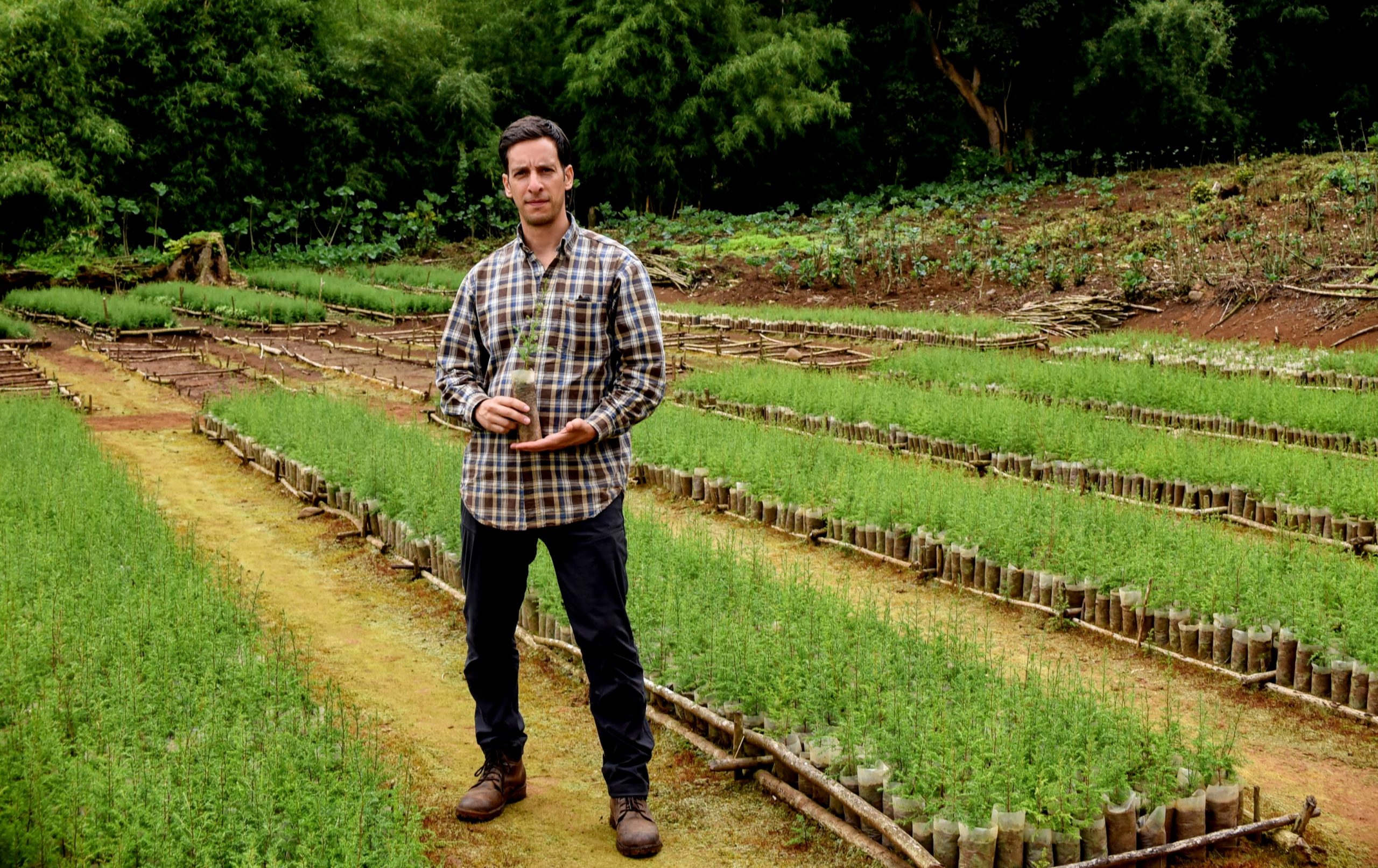
Alumni Spotlight: Matthew Aghai, CEO of Viridian Ecosystems
We’re excited to announce that our 2026 commencement speaker is recent SEFS graduate Matthew Aghai. Matthew received his PhD in 2025 under the mentorship and guidance of Greg Ettl, Sharon Doty and Jerry Franklin, among others. As a PhD candidate he spent his time studying multi-scale approaches to forest restoration and credits his risk tolerance, mentorship and immigrant parents as a few of the reasons he’s found success in the entrepreneurial tech space. We had the opportunity to chat with Matthew about his time at SEFS, career trajectory and his guidance and hope for the class of 2026.
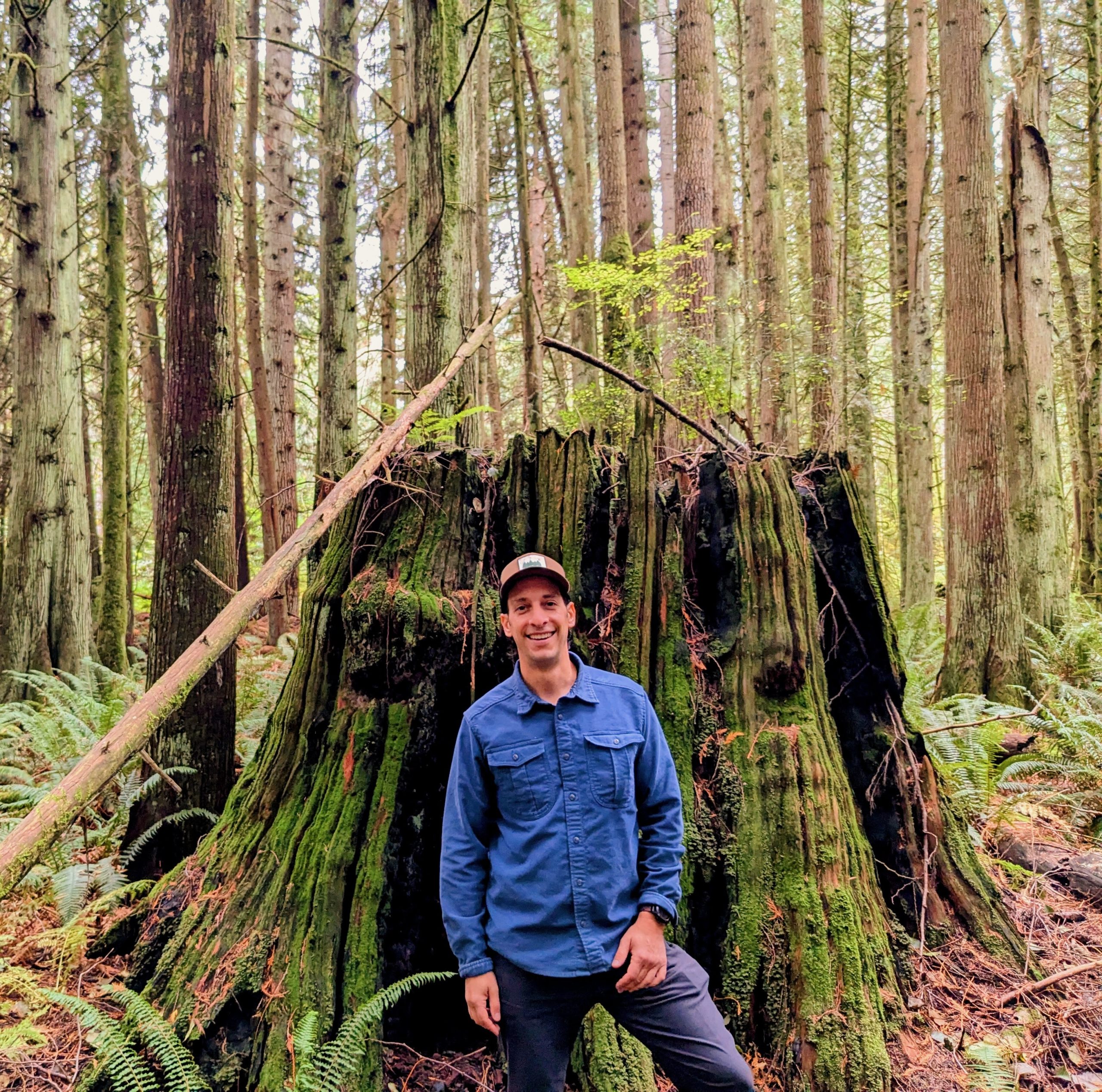
Tell us a little bit about what you’re up to now in your career and what you do as the CEO of Viridian Ecosystems.
Regionally, Viridian Ecosystems builds permanent financing infrastructure that transforms wildfire-threatened landscapes from liability into living capital, enabling communities to fund prevention at scale, restore ecological health, and unlock the long-term value embedded in their land. Put simply, we’re working to make ecosystem health financially visible, measurable, and investable. Globally, our advisory practice works with NGOs, corporates, and state actors to build the capacity and market infrastructure to deploy nature-based solutions, primarily focused on empowering subsistence farmers and other land stewards directly. Ultimately, we’re building the platform for a modern natural infrastructure marketplace.
When did your interest in technology and natural resource management take shape? Are you surprised by your career trajectory or has it felt like a natural progression?
In some ways, yes, it was a natural progression. I’d credit systems thinking, a habit of paying attention to broader cause and effect in the work I was doing, and a healthy dose of the right place, right time.
Being in Seattle accelerated it. SEFS placed me alongside some of the best-preserved old-growth and dynamic managed forests on the planet, with deeply intertwined ecological and economic histories, in a department shaped by iconic figures in forest science and policy. Doing that while sitting at one of the up-and-coming epicenters of tech and startups was a unique vantage point. I wanted to be part of how this landscape navigated what was coming, including shifting resource economics, policy turbulence, climate change and wildfire, the move from traditional extractive economies to more technology-driven ones, and the workforce and landscape change that follows.
I was also deeply curious about the capital structures funding speculative tech and innovation. I watched massive sums get poured into software, e-commerce, and figuring out how to deliver little brown boxes faster, and wanted to find a way to redirect some of that pipeline toward forests and restoration. The tools, capital structures, and markets serving forestry were going to have to evolve, and the people willing to bridge those worlds would shape what came next.
I’d also credit my perspective as a first-generation American. My parents immigrated with very little and no safety net, and built lives and prosperity from scratch. That shaped how I think about opportunity, and made me more willing to bet on building something where it doesn’t yet exist.
What role has mentorship played in your success/career? Any specific people during your journey that kept you motivated or helped you realize your potential?
Mentorship has been everything for staying grounded, informed, and inspired. That said, I’d caution against trying to mirror anyone else’s career. It’s a double-edged sword.
At SEFS specifically, a few mentors shaped how I think. Greg Ettl invited me into a program that taught me both the technical fundamentals and how to approach hard problems. Jerry Franklin opened my eyes to an intertwined political and management history of the landscape and Sharon Doty taught me to look past the obvious (in that case into the microbiome) mechanisms driving resilience in the plant world…many others opened doors, particularly at the school forest where I spent countless hours with practitioners and stewards in the forestry industry. What mattered most was the access and dialogue about what I was experiencing and learning. Beyond mentors, peers and collaborators who became long-term thinking partners are equally important. My lab mates represented perspectives from literally every continent in our daily dialogue. That bench is what carries me mid-career and who I call to partner with me, check me, encourage me, or console me.
What do you wish you had known as a soon-to-be graduate about finding a job or taking the next steps in the unknown?
Every experience is valuable, even the ones that turn out to be wrong. The faster you stack experiences, the faster you figure out what fits. And the single best piece of advice I ever got, early in my career, was to develop one expertise. Once you’ve demonstrated it and practiced using it, you have a playbook for learning and looking at problems as an expert, and you can apply that same playbook to almost anything for the rest of your career.
How has having an entrepreneurial mindset and ambition prepared you for the challenges in this job market?
Risk tolerance is the muscle, and you need to build it and form a callus. It’s not about having one magic idea. It’s about taking informed risks and learning that the informed part is what matters. Coming from a humble background without a built-in network, I also had to learn that people genuinely want to help, innovate, and be part of building something. You just have to ask.
That was underpinned by a formal education, a value that my family insisted upon, and that hard work and the privilege of a functional higher education system accommodated. I bounced between work and school for economic reasons, but ultimately followed through. Undergrad taught me the baselines, my master’s taught me to master and evolve process, and my PhD taught me to work at the edge of what’s known. All three made me radically more comfortable operating in the unknown, which is most of what entrepreneurship actually is in my perspective.
How have you seen alternative career pathways take hold in the environmental and forest sciences space over the years? What advice would you give to an up and coming grad interested in taking the entrepreneurial route?
Generalizing, twenty years ago there were maybe four routes. Industry, agency, academia, or consulting. Now there’s a whole lattice that includes conservation tech, climate finance, nature-based solutions markets, geospatial and remote sensing, policy shops, and mission-driven private capital. It’s far more diverse and, honestly, far less stable, so I won’t pretend otherwise. My advice? Build real, hard skills (yes, including the GIS and stats classes you’ve been avoiding), get exposure to as many adjacent worlds as you can early, and then follow opportunities, not trends. The formula still works, and it’s not just a national set of opportunities anymore, there is increasing global commerce that requires the skills of well educated environmental professionals and natural resource stewards. To summarize…core skills, genuine interest, a willingness to look stupid while you learn, followed by an eye out for doors that may open in unexpected or unconventional places.
What is one of the unforeseen or unpredictable ways that you’ve seen technology impact reforestation and/or native plant restoration?
The unexpected impact hasn’t been any single technology. It’s how the cumulative advances in remote sensing, modeling, genetics, and field monitoring have quietly made ecological outcomes measurable and verifiable enough to attract attention from a broader public and serious policymakers, which in turn attracts a broader diversity of capital, and presents opportunities to create new markets and new market solutions for myriad conservation and resource planning needs. I’m optimistic, and still have half a career ahead of me (I hope), so I continue to push for systematic change at the nexus of commerce and ecosystems, such that we can reach a more resilient state.