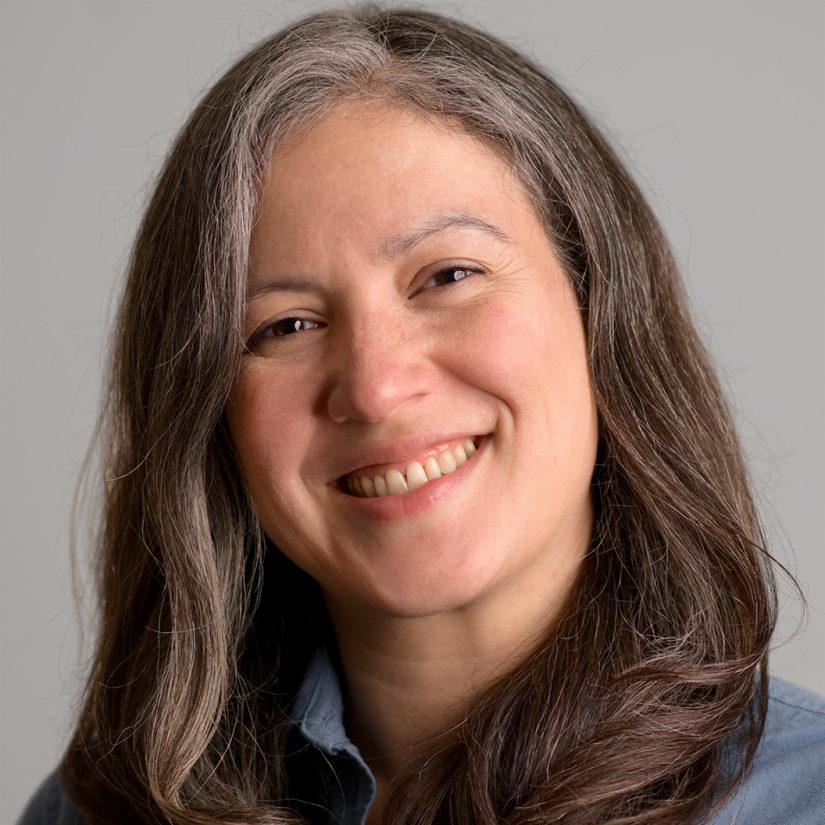
Francisca Santana
- Assistant Professor
- John C. Garcia Professor
Francisca Santana
- Assistant Professor
- John C. Garcia Professor
Research areas
Dr. Francisca (“Kika”) Santana studies the social and psychological processes underpinning conservation and climate adaptation behavior. Her research investigates topics such as community perspectives on prescribed fire in Washington State, individual and collective responses to compound wildfire hazards such as smoke, wildfire risk, and power shutoffs in the U.S. West, and community-led resilience and climate adaptation in coastal communities. She draws on theories and approaches from conservation and social psychology, environmental sociology, and human geography, while using multiple methods, such as surveys and semi-structured interviews. Her work is often community-engaged, and aims to co-produce science in partnership with local and Indigenous communities. She goes by her given name “Francisca” (pronounced fran-SIS-kah), and the nickname “Kika” (pronounced KEE-kah), a diminutive of Francisca from Mexican Spanish.
B.A. History, Yale University
M.S. Environmental Science and Management, Bren School, University of California Santa Barbara
Ph.D. Environment and Resources, Stanford University
Autumn 2027-28 Admissions: Please reach out to Professor Santana to inquire about their ability to admit new students.
Courses
- ESRM 101 | Forests and Society (5) - TBD
- ESRM 371, ENVIR/SOC 379 | Environmental Sociology (5) - TBD
- SEFS 504 | Social Science Methods (3) - TBD
- SEFS 550B | Theories of Environmental Behavior (3) - TBD
Current sponsored projects
Exploring Prescribed Fire Perceptions in Washington State.
Evaluating the psychological and social benefits of community-engaged ecosystem restoration in Puget Sound
The role of social learning in transforming prescribed fire practices
Community adaptive capacity to smoke events and the social dimensions of scaling up prescribed burning
Informing human risk perception of and response to wildland fire smoke using new satellite-derived extreme smoke event data
Selected publications
Dickson-Hoyle, S., Santana, F. N., Szostak, C., & Oelke, N. (2026). Wildfire research and mental health: Impacts, reflections, and a call to action. Fire Ecology, 22, Article 20.
Outhwaite, A. A., Santana, F. N., Ferguson, G. V., Matherne, C., Dardar, D., & Bethel, M. B. (2026). Woven through time: Five strategies for enduring Indigenous-academic co-production. Estuaries and Coasts, 49, Article 130.
Santana, F. N., Ferguson Irlanda, C. E., Naggea, J., Singeo, A., Lindsey, E., Yurkanin, A., Stark, T. E., & de Rosnay, A. (2026). Four strategies for ethical and effective community-based survey co-development in environmental social science. Society & Natural Resources, 1–18.
Santana, F. N., Gonzalez, D. J. X., & Wong-Parodi, G. (2021). Psychological factors and social processes influencing wildfire smoke protective behavior: Insights from a case study in Northern California. Climate Risk Management, 34, 100351.
Santana, F. N., Herbert, N., & Wong-Parodi, G. (2024). Descriptive social norms, social support, and behavioral response to climate-related and co-occurring health hazards. Journal of Risk Research, 27(1), 138–165.
Santana, F. N., Yurkanin, A., Stark, T. E., Lindsey, E., Ardoin, N. M., & Wong-Parodi, G. (2023). Mālama i ke kai: Exploring psychosocial factors associated with personal and community coral reef conservation behavior on Maui, Hawai‘i. Conservation Science and Practice, Article e13002.